Australian-Style Berry Pavlova
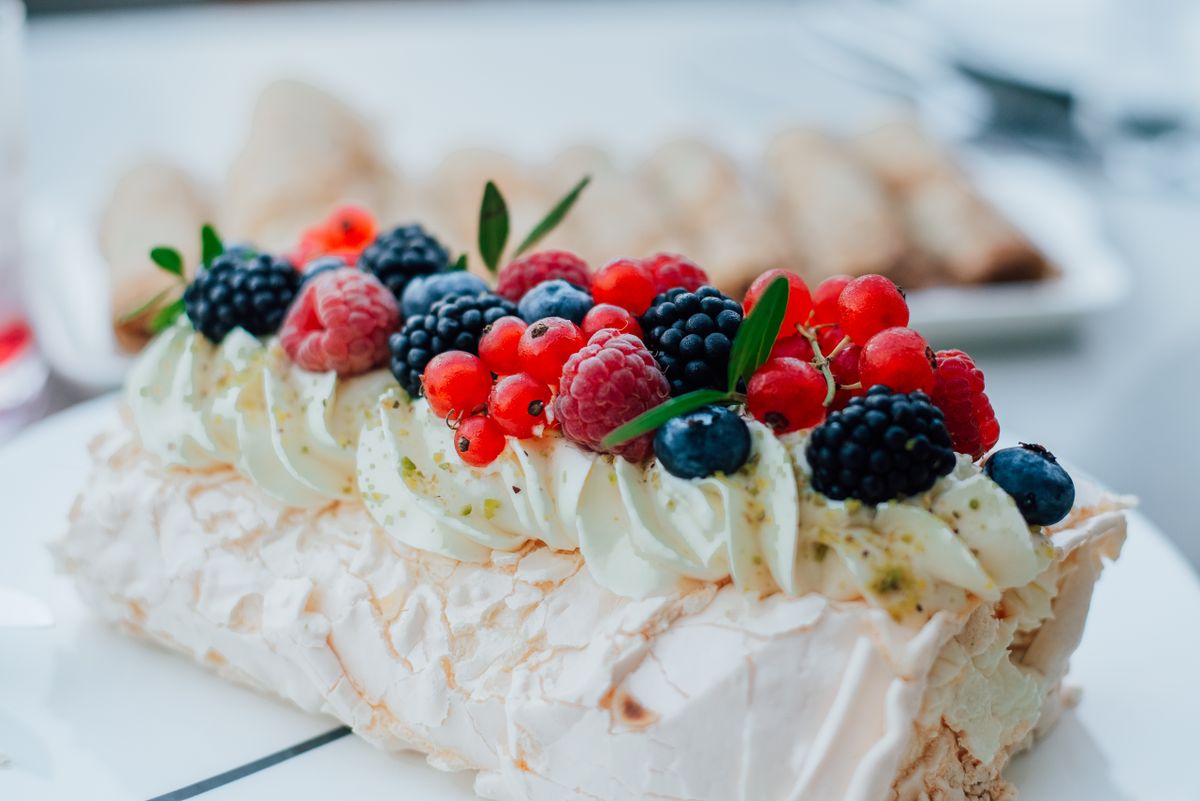
Australian-style crisp-shell berry pavlova with a soft marshmallow centre, topped with cream and berries only after cooling; made for eight slices.
🍽️ Original recipe: 8 servingsThe original quantities and written steps are for 8 servings. Changing the number scales only the ingredient checklist, not method or cooking times. Cook larger batches in appropriate pans.
Jump to ingredients · Jump to method
Cooking times vary with equipment and ingredient size; look for the stated texture and doneness cues.
🛒 Ingredients checklist
👩🍳 Step-by-step method
Preheat a low oven and mark the pavlova circle
Preheat a conventional oven to 110°C (not fan-forced), with a rack in the lower middle. Draw a 20 cm circle on baking paper, turn the paper pencil-side down and place on a flat tray. Prepare a clean metal or glass bowl, never one containing butter or oil residue.
Degrease the mixing bowl and separate four eggs
Rub the inside of the bowl and whisk with the measured 5 ml lemon juice, then wipe dry with clean paper. Separate 4 large eggs one at a time into a smaller bowl, transferring only clean whites to the main bowl; even a small spot of yolk can prevent a strong meringue.
Whip whites to soft peaks before any sugar
Using an electric mixer at medium speed, beat the four egg whites for roughly 3–4 minutes until opaque white foam forms. Lift the whisk; a soft peak should curl over rather than stand straight. Do not try to pour all 235 g sugar into liquid whites, which can weigh down the mixture.
Add caster sugar slowly and beat to glossy peaks
Increase the mixer to medium-high and sprinkle the 235 g caster sugar in roughly eight small additions across 8–10 minutes. Scrape the sides with the mixer stopped. Finish when the meringue is thick, glossy and forms a tall peak that keeps its shape; rub a little mixture between clean fingers to check most gritty sugar has dissolved.
Fold in stabilisers and form a high round nest
Sift 8 g cornflour over the meringue and drizzle on 5 ml white vinegar and 5 ml vanilla. Fold lightly only 5–6 times with a clean spatula to combine. Pile within the marked 20 cm circle, shaping high sides with a shallow centre dip for the cream while keeping the mound intact.
Bake undisturbed at 110°C for ninety minutes
Slide the tray onto the oven rack, close the door gently and bake for about 90 minutes without repeatedly opening it. At the end the outside should be dry, lightly ivory and crisp to a gentle tap, not deeply brown; the middle should remain soft inside the shell.
Switch off and cool slowly with the oven shut
Turn off the oven and leave the pavlova inside with the door closed for at least 90 more minutes so it cools gradually rather than cracking badly from sudden temperature changes. Then carefully slide the completely cool shell onto a serving plate; some harmless surface cracks are normal.
Whip fresh cream, top with berries and serve
Keep 250 ml cream cold until needed, then whip with 12 g icing sugar for about 2–4 minutes until soft peaks hold. Wash and thoroughly dry 320 g mixed berries, spread cream gently into the hollow and add all fruit on top only just before serving. Cut into eight slices and refrigerate cream-topped leftovers promptly at 5°C or colder.
Helpful cooking tips and swaps
Add caster sugar slowly and let the pavlova cool in the switched-off oven. Only add cream and fresh berries shortly before serving to protect the crisp shell.
🌡️ Food safety and allergens
Contains egg and milk (whipping cream). Check labels for vanilla and other packaged ingredients.
Keep the unfilled cooled meringue airtight and dry; once topped with cream and berries, refrigerate at 5°C or colder and eat preferably on the day of assembly.
Practical FAQs
Can I make a bigger batch?
Yes. Use the ingredient scaler but adjust the number of pans or batches. Cooking time does not automatically scale with quantity.
How should leftovers be stored?
Keep the unfilled cooled meringue airtight and dry; once topped with cream and berries, refrigerate at 5°C or colder and eat preferably on the day of assembly.
Food safety source: Food Standards Australia New Zealand