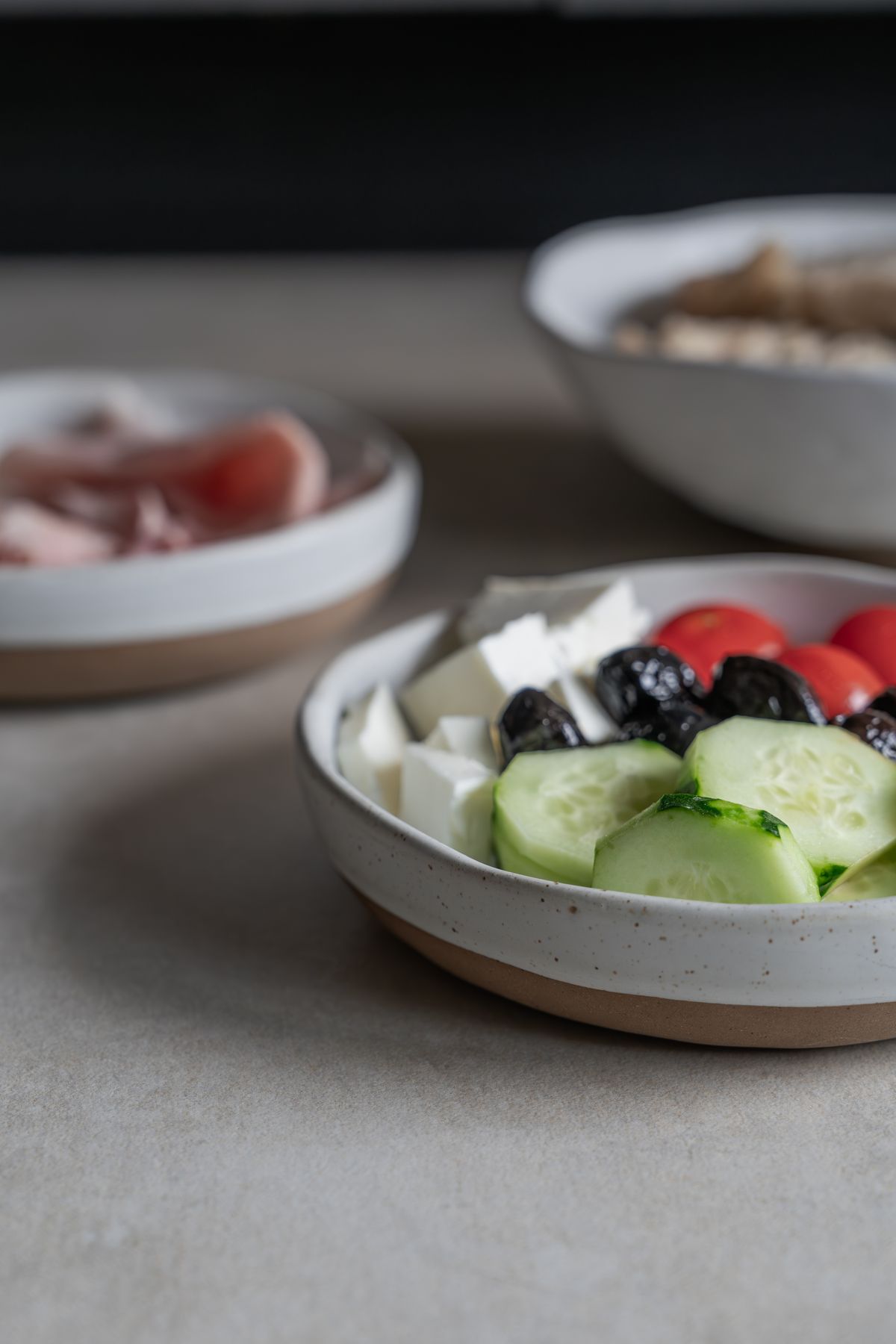
Cucumber, Tomato, Feta & Olive Salad
A crisp Mediterranean-style salad with tomato, cucumber, feta and Kalamata olives, dressed just before serving so vegetables stay fresh.
🍽️ Original recipe: 2 servingsThe original quantities and written steps are for 2 servings. Changing the number scales only the ingredient checklist, not method or cooking times. Cook larger batches in appropriate pans.
Jump to ingredients · Jump to method
Cooking times vary with equipment and ingredient size; look for the stated texture and doneness cues.
🛒 Ingredients checklist
👩🍳 Step-by-step method
Wash and dry the produce
Under running water wash 180 g Lebanese cucumber and 180 g cherry tomatoes, then dry with a clean towel. Rinse the 50 g red onion after peeling. Keep the feta and olives refrigerated until the other ingredients are ready.
Cut similar bite-sized pieces
Slice the cucumber into roughly 8 mm thick rounds and halve the cherry tomatoes. Slice the red onion as thinly as practical. Thin onion gives a gentler bite; for a milder result, rinse slices briefly with cold drinking water and drain well.
Mix a small lemon dressing
In a separate small bowl whisk 15 ml extra virgin olive oil with 10 ml lemon juice, 2 g dried oregano and 1 g ground black pepper. The dressing will look slightly cloudy when mixed. Taste first; feta and olives already bring salt, so no extra salt is needed.
Arrange vegetables and olives
Put cucumber, tomatoes and onion in a roomy serving bowl. Add 45 g drained pitted Kalamata olives and toss lightly once. Avoid crushing the tomatoes; a large bowl leaves enough space to coat the vegetables without bruising them.
Finish with feta just before serving
Break 70 g cold feta into rough pieces and place on top. Drizzle with all the lemon dressing and gently turn just once or twice so the feta stays visible and the salad is not watery. Serve immediately; chilled leftovers soften and release liquid.
Helpful cooking tips and swaps
레몬즙 대신 레드와인식초를 소량 넣어도 된다. 이 버전은 레몬 드레싱이며 페타·올리브의 염분을 생각해 간을 조절한다.
🌡️ Food safety and allergens
우유(페타 치즈)를 포함한다. 올리브와 치즈 라벨을 확인하고, 페타의 동물성 렌넷 여부에 따라 채식 적합성이 달라질 수 있다.
5°C 이하 냉장하고 먹기 직전에 드레싱을 넣는다. 더운 곳에 두지 않으며 남은 샐러드는 채소가 물러질 수 있으니 가능하면 새로 만들어 먹는다.
Practical FAQs
Can I make a bigger batch?
Yes. Use the ingredient scaler but adjust the number of pans or batches. Cooking time does not automatically scale with quantity.
How should leftovers be stored?
5°C 이하 냉장하고 먹기 직전에 드레싱을 넣는다. 더운 곳에 두지 않으며 남은 샐러드는 채소가 물러질 수 있으니 가능하면 새로 만들어 먹는다.
Food safety source: Food Standards Australia New Zealand