Greek Lemon Oregano Chicken and Roast Potatoes
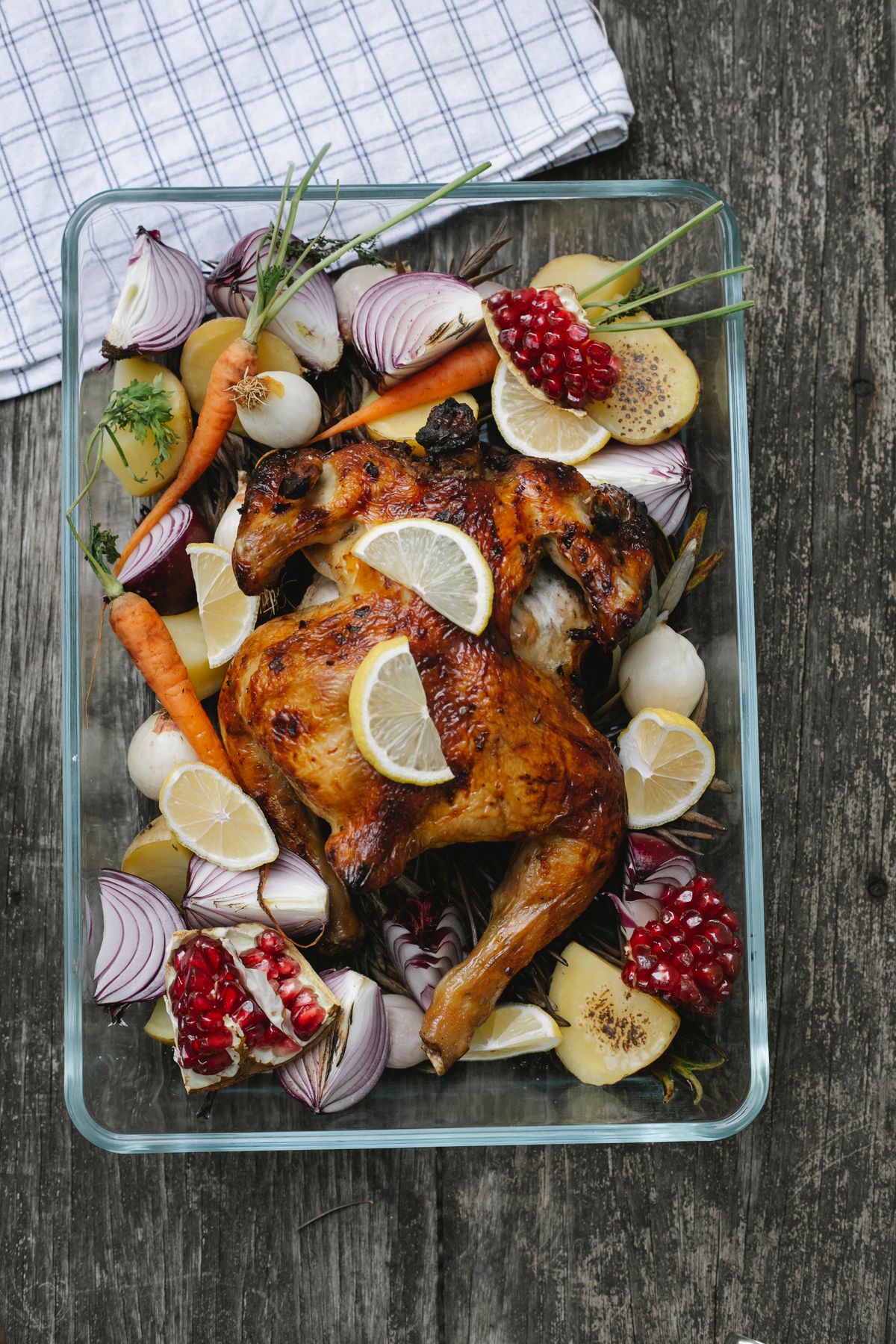
Greek-inspired lemon, garlic and oregano chicken thighs roasted with potato wedges in one oven tray, safely cooked and finished golden.
🍽️ Original recipe: 4 servingsThe original quantities and written steps are for 4 servings. Changing the number scales only the ingredient checklist, not method or cooking times. Cook larger batches in appropriate pans.
Jump to ingredients · Jump to method
Cooking times vary with equipment and ingredient size; look for the stated texture and doneness cues.
🛒 Ingredients checklist
👩🍳 Step-by-step method
Preheat the oven and prepare a deep roasting dish
Set the oven to 200°C conventional or 180°C fan-forced, with a shelf near the centre. Prepare a deep metal or ceramic roasting dish that fits four chicken thighs without piling them up; line a clean chopping board only for potatoes and other ready-to-cook vegetables.
Cut potatoes into matching oven wedges
Peel 850 g all-purpose potatoes and cut into evenly sized wedges roughly 2–3 cm thick at the widest part. Rinse to remove surface starch then dry well with a clean towel; consistent thickness prevents some pieces from being hard while the others break down.
Whisk a fresh lemon-oregano marinade
In a clean bowl whisk 90 ml lemon juice, 6 g lemon zest, 65 ml olive oil, 22 g minced garlic, 7 g oregano, 25 g mustard, 8 g measured salt and 2 g black pepper. Beat with a fork for about a minute until lightly emulsified; there should be fragrant lemon and herbs with no unmixed mustard lumps.
Coat potatoes and chicken without cross-contamination
Toss potato wedges in half the measured lemon mixture on a clean tray. Keeping raw chicken on its own board, use the other half to coat all four chilled thighs, then place skin-side up among the potatoes in the deep dish. Discard marinade from a raw-chicken bowl rather than serving it as a dressing.
Add water, cover and roast until the potato centres soften
Pour all 200 ml drinking water carefully around the edge of the roasting dish, not over the chicken skin. Cover tightly with foil and roast for 40 minutes so the lemon-garlic liquid steams the wedges and penetrates them. Open carefully away from your face to avoid steam burns.
Uncover and brown chicken and potato edges
Remove foil and roast for another 30–35 minutes until potato edges are deeply golden and the chicken skin browns. Turn the potato wedges halfway through if necessary; check the deepest part of each thigh with a clean food thermometer without hitting the bone. Every chicken piece must read at least 75°C in the centre.
Rest the chicken and check potato texture
Take the whole tray from the oven, scatter 10 g fresh thyme leaves over the hot food and let it rest loosely covered for 10 minutes. Pierce a potato wedge with a fork: the centre should be tender, and there should be no crunchy raw core. Return any undercooked potatoes to the oven without overcooking the already-safe chicken.
Serve four hot plates and store leftovers promptly
Place one fully cooked chicken thigh and about a quarter of the potatoes on each plate, spooning a little of the cooked lemon roasting juice over the top. Cool any leftovers quickly in shallow containers and refrigerate at 5°C or colder; eat within 2–3 days or freeze soon after cooking.
Helpful cooking tips and swaps
Cover initially to help the potato wedges absorb the lemon liquid, then uncover for colour. Measure 75°C inside the thickest chicken piece, away from bone.
🌡️ Food safety and allergens
Contains mustard; check bottled mustard for other allergens and declared ingredients.
Cook poultry to at least 75°C. Cool leftovers quickly, refrigerate at 5°C or colder and use within 2–3 days or freeze early; reheat thoroughly.
Practical FAQs
Can I make a bigger batch?
Yes. Use the ingredient scaler but adjust the number of pans or batches. Cooking time does not automatically scale with quantity.
How should leftovers be stored?
Cook poultry to at least 75°C. Cool leftovers quickly, refrigerate at 5°C or colder and use within 2–3 days or freeze early; reheat thoroughly.
Food safety source: Food Standards Australia New Zealand