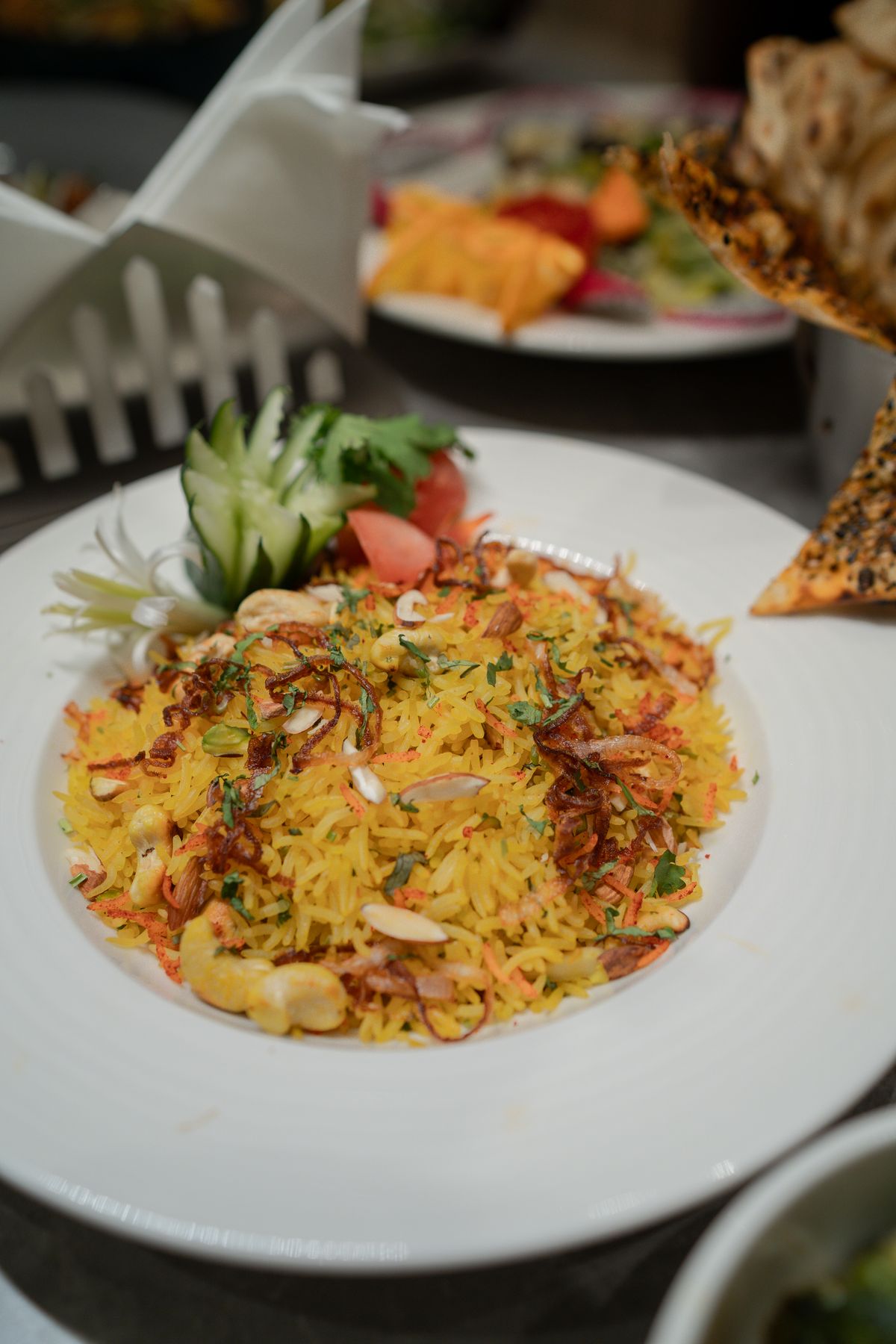
Indian Vegetable Biryani with Cashews
Aromatic Indian vegetable biryani made with aged basmati rice, potato, carrot, green peas, mint and fragrant spices, finished with toasted cashews.
🍽️ Original recipe: 4 servingsThe original quantities and written steps are for 4 servings. Changing the number scales only the ingredient checklist, not method or cooking times. Cook larger batches in appropriate pans.
Jump to ingredients · Jump to method
Cooking times vary with equipment and ingredient size; look for the stated texture and doneness cues.
🛒 Ingredients checklist
👩🍳 Step-by-step method
Wash and soak the measured aged basmati rice
Rinse 300 g dry aged basmati rice in a sieve with cool drinking water until less cloudy. Cover with clean water in a bowl for about 15 minutes while preparing vegetables, then drain thoroughly. Soaking helps long grains cook evenly, but use aged basmati rather than sticky short-grain rice.
Cut potatoes and carrots to controlled sizes
Peel 180 g potato and cut into 1.5 cm cubes, cut 140 g carrot into 1 cm cubes, slice 170 g onion thinly, and dice 150 g tomato. Measure 110 g frozen peas, grate 15 g ginger and mince 15 g garlic before turning on the heat, so thick potato chunks will not remain raw.
Brown onions and release the whole spice aromas
Heat 35 ml neutral oil in a deep heavy lidded pot over medium heat. Add 170 g sliced onion and stir for around 6–8 minutes until pale golden at the edges, then add 4 g cumin seeds, one cinnamon stick and two bay leaves for 45 seconds until fragrant but not blackened.
Cook potatoes, carrots and aromatic paste
Add the measured diced potato and carrot, stirring around three minutes until surfaces begin to soften. Mix in minced garlic, grated ginger, 7 g garam masala and 2 g turmeric; stir 30–45 seconds, adding a spoon of the measured 580 ml water only if the powdered spices begin sticking.
Soften tomato and stir in peas and fresh herbs
Add 150 g diced tomato, 110 g green peas and the measured 5 g salt. Cook for about 3–4 minutes on medium-low until the tomato collapses into a light sauce; fold through half of the 15 g mint and half of the 15 g coriander, reserving the rest for serving.
Layer soaked rice and add only the measured water
Spread the drained 300 g basmati rice evenly over the vegetable base without mashing the vegetables. Carefully pour in the remaining portion of the measured 580 ml drinking water, stirring once gently near the edge. Bring just to a simmer, cover tightly and reduce to low heat for about 18–22 minutes.
Check rice and potato tenderness before resting
Open the lid once near the end and check a grain of rice and one of the largest potato cubes with a clean spoon. Rice should be tender without a hard centre and potatoes should yield easily to a fork; if not, add a splash of hot water and cover for 3–5 more minutes. Turn off heat and rest covered ten minutes.
Fluff gently and finish with lemon and cashews
Remove the whole cinnamon stick and bay leaves, then gently fluff the rice and vegetables with a fork so grains stay intact. Add 20 ml lemon juice, the reserved mint and coriander, and all 50 g toasted unsalted cashews. Divide between four plates; chill any leftover rice rapidly in shallow containers at 5°C or colder.
Helpful cooking tips and swaps
Aged basmati grains need controlled moisture; when in doubt check tenderness rather than adding excessive water. Scatter cashews over the finished rice for crunch.
🌡️ Food safety and allergens
Contains cashew tree nuts. Check spice blends for allergens and animal-derived components before making vegan claims.
Cooked rice must be cooled promptly to reduce Bacillus cereus risk. Refrigerate at 5°C or colder, use within 1–2 days or freeze promptly; reheat thoroughly.
Practical FAQs
Can I make a bigger batch?
Yes. Use the ingredient scaler but adjust the number of pans or batches. Cooking time does not automatically scale with quantity.
How should leftovers be stored?
Cooked rice must be cooled promptly to reduce Bacillus cereus risk. Refrigerate at 5°C or colder, use within 1–2 days or freeze promptly; reheat thoroughly.
Food safety source: Food Standards Australia New Zealand