Indonesian Chicken Satay with Peanut Sauce
Indonesian-style chicken satay skewers marinated in kecap manis, oven-cooked until safely done and served with a measured coconut-peanut dipping sauce.
🍽️ Original recipe: 4 servingsThe original quantities and written steps are for 4 servings. Changing the number scales only the ingredient checklist, not method or cooking times. Cook larger batches in appropriate pans.
Jump to ingredients · Jump to method
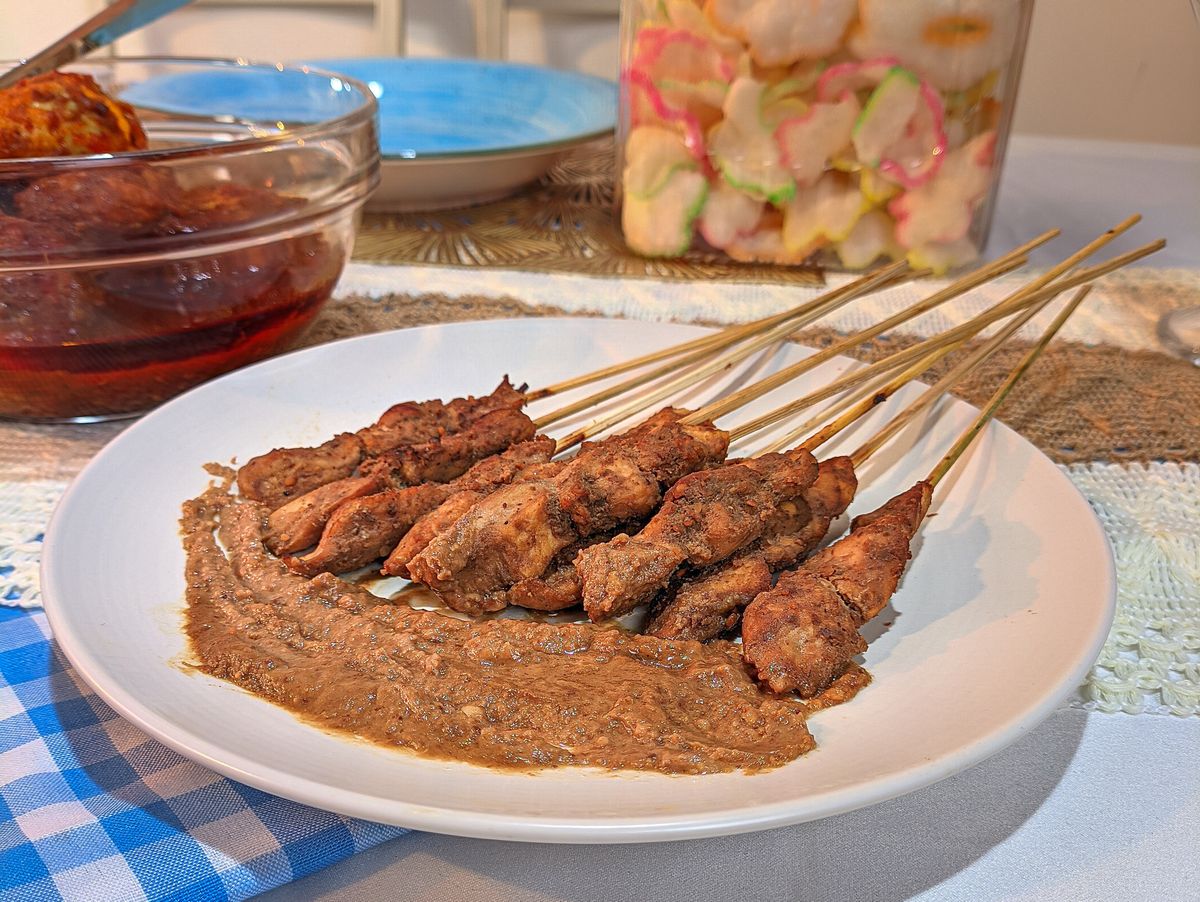
Cooking times vary with equipment and ingredient size; look for the stated texture and doneness cues.
🛒 Ingredients checklist
👩🍳 Step-by-step method
Wash, soak and set out the bamboo skewers safely
Soak 12 short bamboo skewers in a clean dish of drinking water for at least 30 minutes so exposed ends are less likely to burn. Prepare a lined oven tray with a rack and have clean tongs ready. Do not mix clean sauce utensils with the raw chicken board.
Cut chilled chicken and whisk a fresh spice marinade
Cut 550 g refrigerated chicken thigh into approximately 3 cm chunks. Stir together 50 ml kecap manis, 20 ml of the measured lime juice, 10 g of the 15 g garlic, 5 g coriander powder, 3 g cumin, 2 g turmeric and 10 ml of the 20 ml neutral oil. The marinade should coat a spoon with no powder clumps.
Marinate covered chicken in the refrigerator
Add the chicken pieces to the measured spice marinade, gently fold until every surface is coated, then cover and refrigerate at 5°C or colder for 30 minutes. Keep the separate peanut sauce ingredients chilled and never use leftover raw marinade as a finished dipping sauce.
Cook a smooth coconut-peanut sauce
Warm the final 10 ml oil in a small saucepan over medium-low heat and stir in the remaining 5 g garlic and 10 g sliced chilli for about 30 seconds. Add 110 g peanut butter, 180 ml coconut milk, 25 ml kecap manis, 100 ml drinking water, 10 g brown sugar and remaining 15 ml lime juice; whisk gently for 3–5 minutes until spoon-coating, not scorched.
Thread chicken without cramming and preheat the oven
Heat the oven to 210°C conventional or 190°C fan-forced and position the rack centrally. Thread chicken onto the 12 drained skewers, spacing pieces gently so heat can circulate. Lay skewers on the prepared rack without overlap, with the thickest pieces nearer the middle.
Bake and turn until chicken reaches 75°C
Bake for about 18–22 minutes, turning each skewer at around the 10-minute mark to brown both sides. Use a clean food thermometer in the centre of the largest chicken piece; it must reach 75°C before serving, regardless of golden edges. If any thick part is below target, return the tray to the oven and recheck.
Keep cooked skewers and sauce off raw surfaces
Move the fully cooked chicken skewers with clean tongs onto a new serving platter. Stir the hot peanut sauce one final time, thinning with a little warm water only if it became too thick on standing. Do not place finished skewers on the tray or plate that held uncooked poultry.
Share twelve skewers and store any extras promptly
Serve three cooked skewers per person with the peanut sauce separately in clean bowls. Rice cakes or rice can be offered alongside but are not part of these measured ingredients. Cool leftovers promptly in covered shallow containers at 5°C or colder and do not leave peanut sauce unrefrigerated for hours.
Helpful cooking tips and swaps
Indonesian kecap manis is thick and sweet, distinct from regular soy sauce. Cook peanut sauce gently and use a thermometer for 75°C poultry doneness.
🌡️ Food safety and allergens
Contains peanuts and soy, and kecap manis often contains wheat/gluten. Check sauces and peanut butter labels.
Refrigerate cooked chicken and peanut sauce promptly at 5°C or colder, using within 1–2 days or freezing early. Reheat fully before eating.
Practical FAQs
Can I make a bigger batch?
Yes. Use the ingredient scaler but adjust the number of pans or batches. Cooking time does not automatically scale with quantity.
How should leftovers be stored?
Refrigerate cooked chicken and peanut sauce promptly at 5°C or colder, using within 1–2 days or freezing early. Reheat fully before eating.
Food safety source: Food Standards Australia New Zealand