Korean-Style Black Bean Jjajangmyeon Noodles
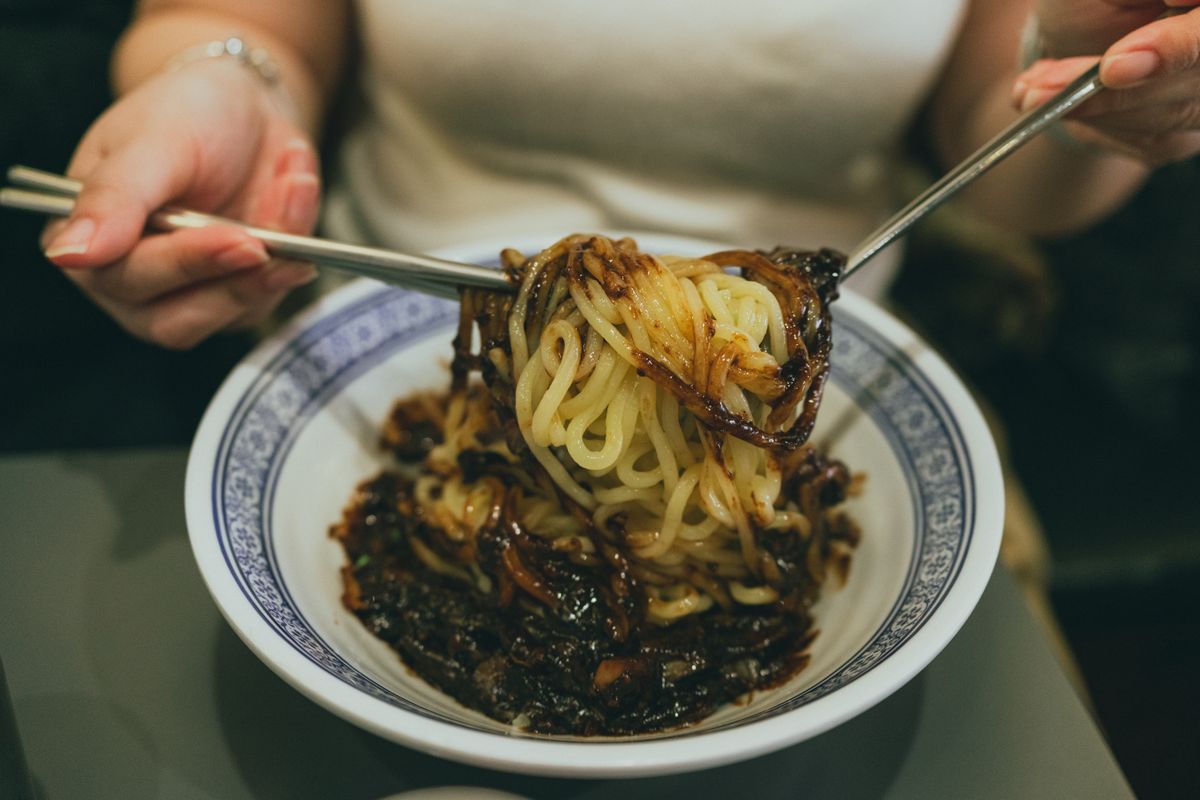
Korean-Chinese jjajangmyeon featuring chewy wheat noodles tossed in a glossy fermented black bean sauce with pork, onion, potato and zucchini.
🍽️ Original recipe: 4 servingsThe original quantities and written steps are for 4 servings. Changing the number scales only the ingredient checklist, not method or cooking times. Cook larger batches in appropriate pans.
Jump to ingredients · Jump to method
Cooking times vary with equipment and ingredient size; look for the stated texture and doneness cues.
🛒 Ingredients checklist
👩🍳 Step-by-step method
Chop pork and vegetables to a consistent size
Keep 300 g pork chilled and dice into roughly 1 cm cubes on a dedicated meat board. Peel and dice potato, chop onion, carrot and zucchini into even 1 cm pieces, and cut the washed cucumber into thin matchsticks for a fresh final garnish.
Fry the chunjang paste briefly to mellow it
Heat 25 ml of the measured 55 ml oil in a broad non-stick wok over medium-low heat. Add 100 g Korean chunjang and stir gently for 2–3 minutes until slightly glossy, keeping it moving so the fermented paste loses raw sharpness without scorching black.
Brown the pork and start hard vegetables first
Push the fried paste to one side of the pan, add the remaining 30 ml oil and 300 g diced pork, and stir-fry for 4–5 minutes until opaque. Add 180 g potato and 120 g carrot for another 3 minutes, then 260 g onion and 190 g zucchini for 3–4 minutes until softened.
Combine fried bean paste and simmer the vegetable sauce
Stir the fried chunjang through the vegetables and pork, add 25 g sugar and 550 ml drinking water, and bring to a gentle boil. Cover and simmer around 10–12 minutes until the diced potato is soft to a fork and the pork has no undercooked centre; check thick pieces reach 75°C.
Thicken the glossy sauce with a cold starch slurry
Whisk 25 g cornflour into 60 ml cold drinking water until completely smooth. Pour the slurry slowly into the bubbling sauce while stirring constantly for 1–2 minutes; stop when it coats a spoon thickly but remains pourable over noodles. Finish with the measured 12 ml sesame oil.
Cook fresh Korean wheat noodles separately
Bring 2500 ml drinking water to a rolling boil in a large pot and add 600 g fresh jjajangmyeon wheat noodles, loosening the strands gently. Boil for the noodle packet's time, typically 4–6 minutes, until springy with no floury hard centre. Drain well and rinse briefly only if the packet recommends it.
Divide noodles and top with cooked black bean sauce
Divide the cooked drained noodles into four deep bowls and spoon one-quarter of the hot pork-and-vegetable chunjang sauce onto each. Scatter sliced cucumber across the top, toss at the table to coat all noodles and serve while hot; keep leftover sauce refrigerated separately at 5°C or colder.
Helpful cooking tips and swaps
Use Korean chunjang, not spicy doubanjiang or plain dark soy sauce. Fry the paste first and thicken only after the diced potato is tender.
🌡️ Food safety and allergens
Contains wheat/gluten, soy and sesame. Check exact chunjang and noodle packaging for other allergens.
Cool meat sauce and noodles separately and refrigerate promptly at 5°C or below, using within 1–2 days or freezing early.
Practical FAQs
Can I make a bigger batch?
Yes. Use the ingredient scaler but adjust the number of pans or batches. Cooking time does not automatically scale with quantity.
How should leftovers be stored?
Cool meat sauce and noodles separately and refrigerate promptly at 5°C or below, using within 1–2 days or freezing early.
Food safety source: Food Standards Australia New Zealand