Korean Classic Beef and Vegetable Bibimbap
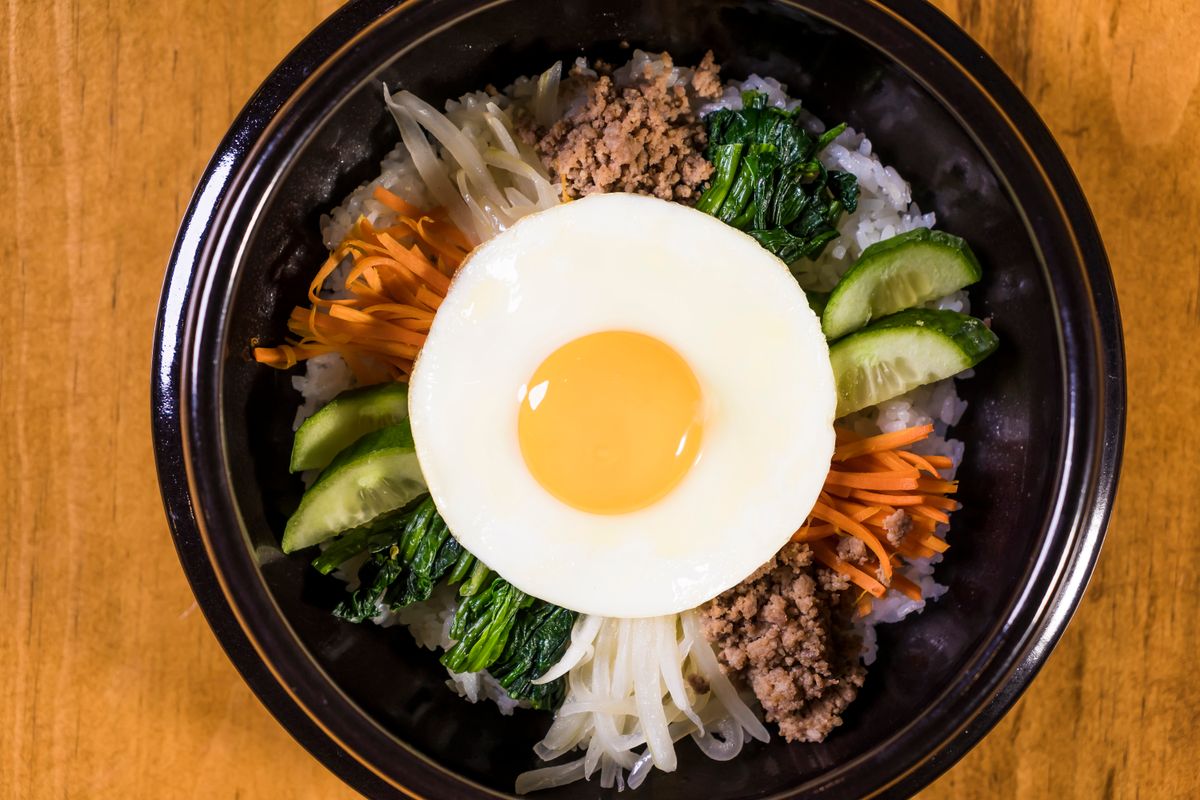
A classic Korean bibimbap bowl with individually seasoned vegetables, cooked beef, warm short-grain rice, a fully cooked egg and gochujang sauce.
🍽️ Original recipe: 4 servingsThe original quantities and written steps are for 4 servings. Changing the number scales only the ingredient checklist, not method or cooking times. Cook larger batches in appropriate pans.
Jump to ingredients · Jump to method
Cooking times vary with equipment and ingredient size; look for the stated texture and doneness cues.
🛒 Ingredients checklist
👩🍳 Step-by-step method
Cook short-grain rice until fluffy and tender
Rinse 260 g dry short-grain rice until the water is less cloudy, drain and add to a lidded pot with 390 ml drinking water. Bring to a boil, cover and simmer gently 13–16 minutes until water is absorbed; rest off the heat for five minutes.
Wash and cut vegetables on a separate board
Rinse 220 g spinach, 220 g soybean sprouts, 180 g carrot and 150 g mushrooms. Slice carrot into thin matchsticks and shiitake into strips. Keep beef mince chilled and separate from the raw vegetables to prevent cross-contamination.
Blanch spinach and soybean sprouts thoroughly
Boil 900 ml drinking water in a pot. Blanch spinach for 45–60 seconds, drain and squeeze dry. In fresh boiling water blanch soybean sprouts until tender and no raw bean aroma remains, around 4–5 minutes; drain well and season both with 10 ml sesame oil and 10 ml soy sauce from the measured quantities.
Sauté carrots, shiitake and well-cooked beef
Heat 20 ml of the measured 30 ml cooking oil in a broad pan. Cook carrot 2–3 minutes, remove, then cook shiitake 3–4 minutes. Add 260 g beef mince, 14 g garlic and 20 ml soy sauce and stir until browned with no raw centres, about 6–8 minutes; keep ingredients in clean separate bowls.
Mix an authentic but adjustable gochujang sauce
Combine 65 g gochujang, 15 ml rice vinegar, 12 g sugar, the remaining 10 ml soy sauce and 10 ml sesame oil in a cup. Stir until smooth; this concentrated sauce is served separately so people can adjust spice level rather than automatically making every bowl very hot.
Fry four eggs with fully set yolks
Warm the final 10 ml cooking oil in a clean non-stick pan over medium-low heat. Crack in four eggs and cook in two batches as needed for 3–5 minutes each until both whites and yolks are fully set. Set aside on a clean plate and avoid touching ready-to-eat items with raw-egg utensils.
Arrange four individual bibimbap bowls
Fluff the hot rice and divide between four warm bowls. Arrange one-quarter of each cooked vegetable and beef topping in tidy sections over the rice and add one fully cooked egg on each. Divide the remaining 10 ml sesame oil and 15 g sesame seeds evenly between bowls.
Mix at the table and protect cooked rice leftovers
Offer the measured gochujang sauce alongside the bowls, adding a little at a time and mixing before eating. Cool leftover cooked rice, meat and greens promptly in shallow containers, refrigerate at 5°C or colder and eat within 1–2 days or freeze early.
Helpful cooking tips and swaps
Cook and drain each topping separately for distinct textures; serve gochujang on the side so everyone can adjust the spice.
🌡️ Food safety and allergens
Contains soy, often wheat/gluten from sauces, sesame and egg. Check commercial paste labels.
Cool cooked rice, meat and eggs quickly and refrigerate at 5°C or colder; use within 1–2 days.
Practical FAQs
Can I make a bigger batch?
Yes. Use the ingredient scaler but adjust the number of pans or batches. Cooking time does not automatically scale with quantity.
How should leftovers be stored?
Cool cooked rice, meat and eggs quickly and refrigerate at 5°C or colder; use within 1–2 days.
Food safety source: Food Standards Australia New Zealand