Korean Crispy Scallion Pajeon with Soy Dip
Classic Korean scallion pajeon with tender long green onions, a light flour-rice-flour batter and a balanced soy-vinegar dipping sauce.
🍽️ Original recipe: 4 servingsThe original quantities and written steps are for 4 servings. Changing the number scales only the ingredient checklist, not method or cooking times. Cook larger batches in appropriate pans.
Jump to ingredients · Jump to method
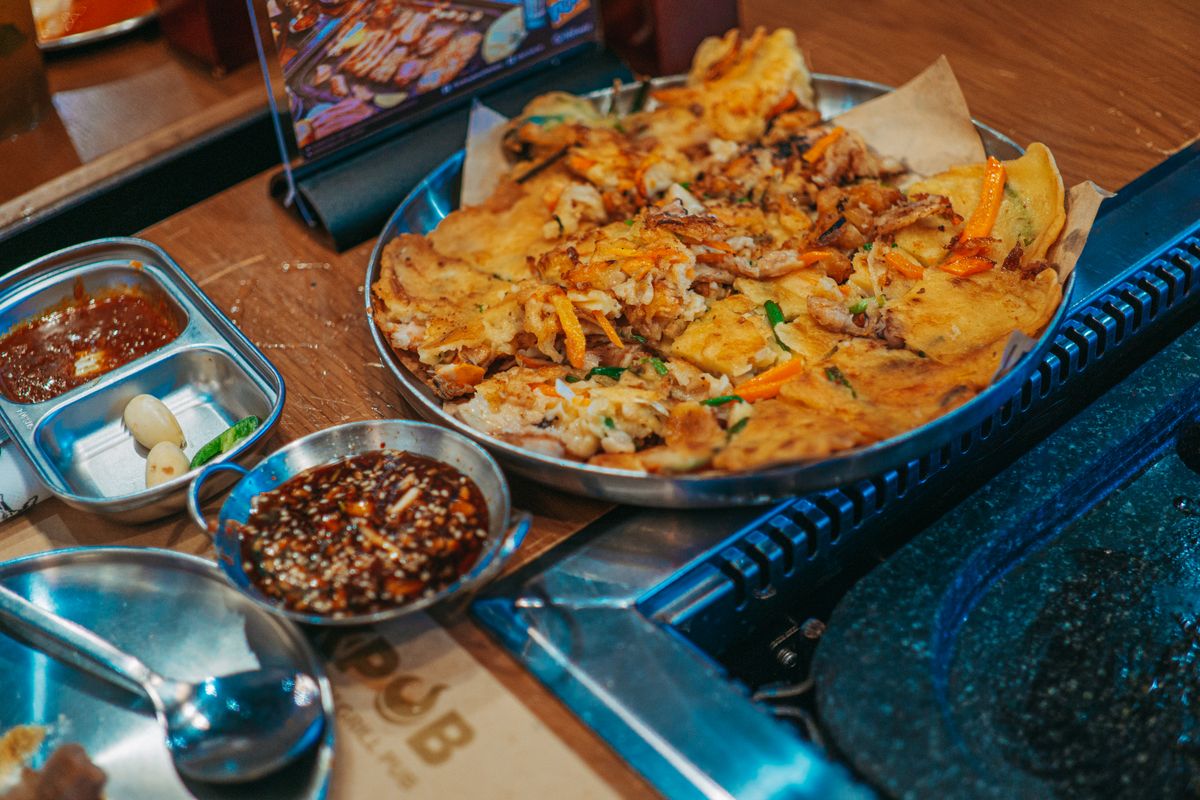
Cooking times vary with equipment and ingredient size; look for the stated texture and doneness cues.
🛒 Ingredients checklist
👩🍳 Step-by-step method
Clean and dry the fresh scallions well
Wash 280 g long spring onions, checking for grit between leaves; trim the roots and cut into sections about 10 cm long. Juliennne 90 g washed carrot into fine matchsticks and dry the vegetables so excess water does not make the pancake soggy.
Whisk rice flour, wheat flour and cold water
Sift 140 g plain wheat flour and 60 g fine rice flour into a bowl with 3 g salt. Add 290 ml cold drinking water and one beaten large egg, whisking briefly until no dry flour pockets remain; a few tiny lumps are fine and overbeating will make it tough.
Make a separate soy-vinegar dipping sauce
In a clean small bowl combine 40 ml light soy sauce, 25 ml rice vinegar, 7 g sugar, 8 g toasted sesame seeds and 10 g sliced mild chilli. Stir until sugar dissolves and set the dip aside away from the hot stovetop.
Heat enough oil to form a crisp first crust
Warm a broad non-stick pan, around 26 cm wide, over medium-high heat. Pour in about half of the measured 55 ml neutral oil, swirling to coat. A tiny drop of batter should sizzle on contact; if the oil smokes heavily, turn down the heat before adding the scallions.
Lay scallions and spread half the batter thinly
Arrange roughly half the scallion lengths and half the carrots parallel in a single thin layer. Spoon over half of the prepared batter and gently tilt the pan until it binds the vegetables without making a thick doughy pancake.
Cook until both sides are golden and cooked
Leave undisturbed for around 4–5 minutes until the underside becomes deep golden and the edges loosen. Slide a broad spatula under and flip confidently, adding a little of the measured oil if needed. Cook the second side 4–5 minutes until no wet egg-flour batter remains in the middle.
Make the second pancake without overcrowding
Transfer the first cooked pancake to a wire rack or warm plate. Use the remaining scallions, carrot, batter and cooking oil to make the second pancake in the same way, adjusting the heat if the pan becomes too hot; rack cooling keeps the underside crisp.
Cut into four portions and serve with soy dip
Cut both fully cooked pancakes into wedges, divide between four plates and serve immediately with the measured dipping sauce. Refrigerate leftovers promptly at 5°C or colder and re-crisp in a dry pan, checking the centre is hot before serving.
Helpful cooking tips and swaps
Dry scallions well, keep batter thin and turn only once the underside has developed a firm golden crust.
🌡️ Food safety and allergens
Contains wheat/gluten, egg, soy and sesame. Check soy sauce and packaged flour labels.
Best served freshly crisp; cool promptly, refrigerate at 5°C or colder and reheat thoroughly within 1–2 days.
Practical FAQs
Can I make a bigger batch?
Yes. Use the ingredient scaler but adjust the number of pans or batches. Cooking time does not automatically scale with quantity.
How should leftovers be stored?
Best served freshly crisp; cool promptly, refrigerate at 5°C or colder and reheat thoroughly within 1–2 days.
Food safety source: Food Standards Australia New Zealand