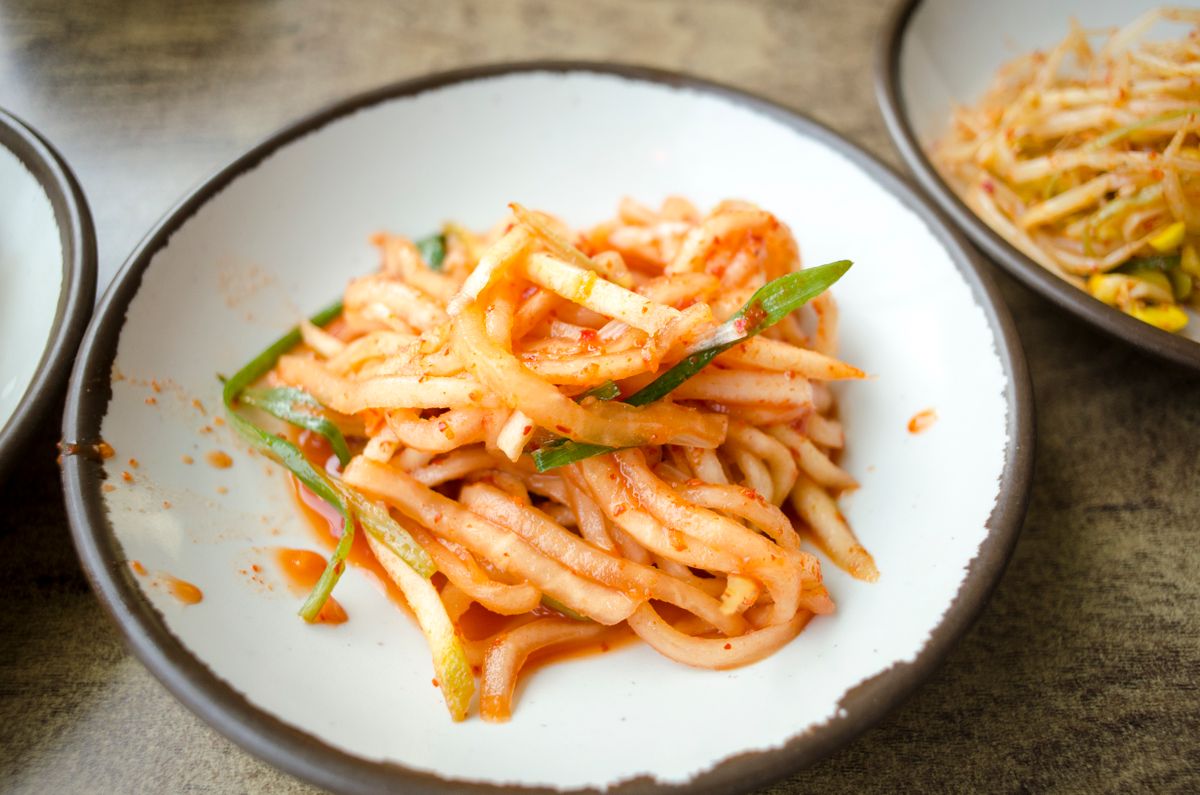
Crunchy Korean Musaengchae (Spicy Radish Salad)
A practical small-batch musaengchae with 350g Korean radish, a brief salt-and-drain method, gochugaru, a tangy dressing and crisp storage guidance.
🍽️ Original recipe: 2 servingsThe original quantities and written steps are for 2 servings. Changing the number scales only the ingredient checklist, not method or cooking times. Cook larger batches in appropriate pans.
Jump to ingredients · Jump to method
Cooking times vary with equipment and ingredient size; look for the stated texture and doneness cues.
🛒 Ingredients checklist
👩🍳 Step-by-step method
Wash and cut the radish
Rinse the whole radish under running water and peel away any damaged outer skin. Weigh 350 g after trimming. Slice into 2–3 mm matchsticks of similar thickness, about 5 cm long; thicker strips take longer to season and very thin shreds lose crunch. Use a clean knife and board.
Salt lightly for 10 minutes
Place the 350 g radish strips in a wide bowl and toss with 4 g fine salt. Spread them out and leave for 10 minutes at normal kitchen temperature. Look for a small puddle of moisture and slightly flexible but still crisp strips; if the room is very warm, minimise bench time.
Drain without rinsing
Tip the radish into a clean colander, let excess liquid run off for 1–2 minutes, then press it very lightly by hand. Do not wring hard or rinse: a little residual seasoning is expected and vigorous squeezing breaks the matchsticks. Return the radish to a dry bowl.
Colour the radish evenly
Sprinkle 12 g gochugaru over the drained radish and toss with a clean spoon or food-safe gloves for around 30 seconds until the white strips look evenly red. Coating the radish before adding the wet dressing helps prevent random red clumps. Start with slightly less chilli if sensitive to heat.
Mix the tangy seasoning
Stir together 10 g sugar, 15 ml rice vinegar, 10 ml anchovy fish sauce and 8 g minced garlic in a small cup. Pour over the coloured radish and toss gently for 30–60 seconds. Taste a small piece: if it is too sharp, add a very small pinch of sugar; if too salty, mix in some additional plain radish.
Add spring onion and sesame
Add 25 g finely chopped spring onion and 3 g toasted sesame seeds. Toss only a few times so the spring onion keeps its colour. Put the salad in a clean serving dish and serve chilled or freshly mixed with rice, grilled meat or bibimbap. Do not let the side dish sit on the table for hours.
Refrigerate the remaining portion
Transfer any uneaten radish salad promptly to a covered clean container and refrigerate at 5°C or colder. For best crunch, aim to eat within 1–2 days; liquid may collect during storage, so lift portions with clean utensils and drain lightly when serving. Discard if off odours, slime or other spoilage signs appear.
Helpful cooking tips and swaps
Use a heavy, firm radish; Korean radish is slightly sweeter, while daikon works if unavailable. Salt only briefly, drain gently and add the wet dressing after the chilli flakes for an even red finish. For a vegetarian variation, replace fish sauce with suitable vegetarian soup soy sauce and adjust salt to taste. For a less spicy version, reduce gochugaru. The ingredients above make a small side dish, not two full main meals.
🌡️ Food safety and allergens
Anchovy fish sauce contains fish. If replacing it with soy-based seasoning, check the label for soy and wheat. Wash the raw radish and spring onion thoroughly under running water; use clean utensils.
Serve promptly or refrigerate at 5°C or below. Aim to eat within 1–2 days for best crunch. Do not leave the prepared salad at room temperature for extended periods.
Practical FAQs
Can I make a bigger batch?
Yes. Use the ingredient scaler but adjust the number of pans or batches. Cooking time does not automatically scale with quantity.
How should leftovers be stored?
Serve promptly or refrigerate at 5°C or below. Aim to eat within 1–2 days for best crunch. Do not leave the prepared salad at room temperature for extended periods.
Food safety source: Food Standards Australia New Zealand