Korean Ginseng Chicken Soup (Samgyetang)
Traditional-style Korean samgyetang made with two small whole chickens, soaked sweet rice, ginseng, garlic and jujubes in a comforting broth.
🍽️ Original recipe: 4 servingsThe original quantities and written steps are for 4 servings. Changing the number scales only the ingredient checklist, not method or cooking times. Cook larger batches in appropriate pans.
Jump to ingredients · Jump to method
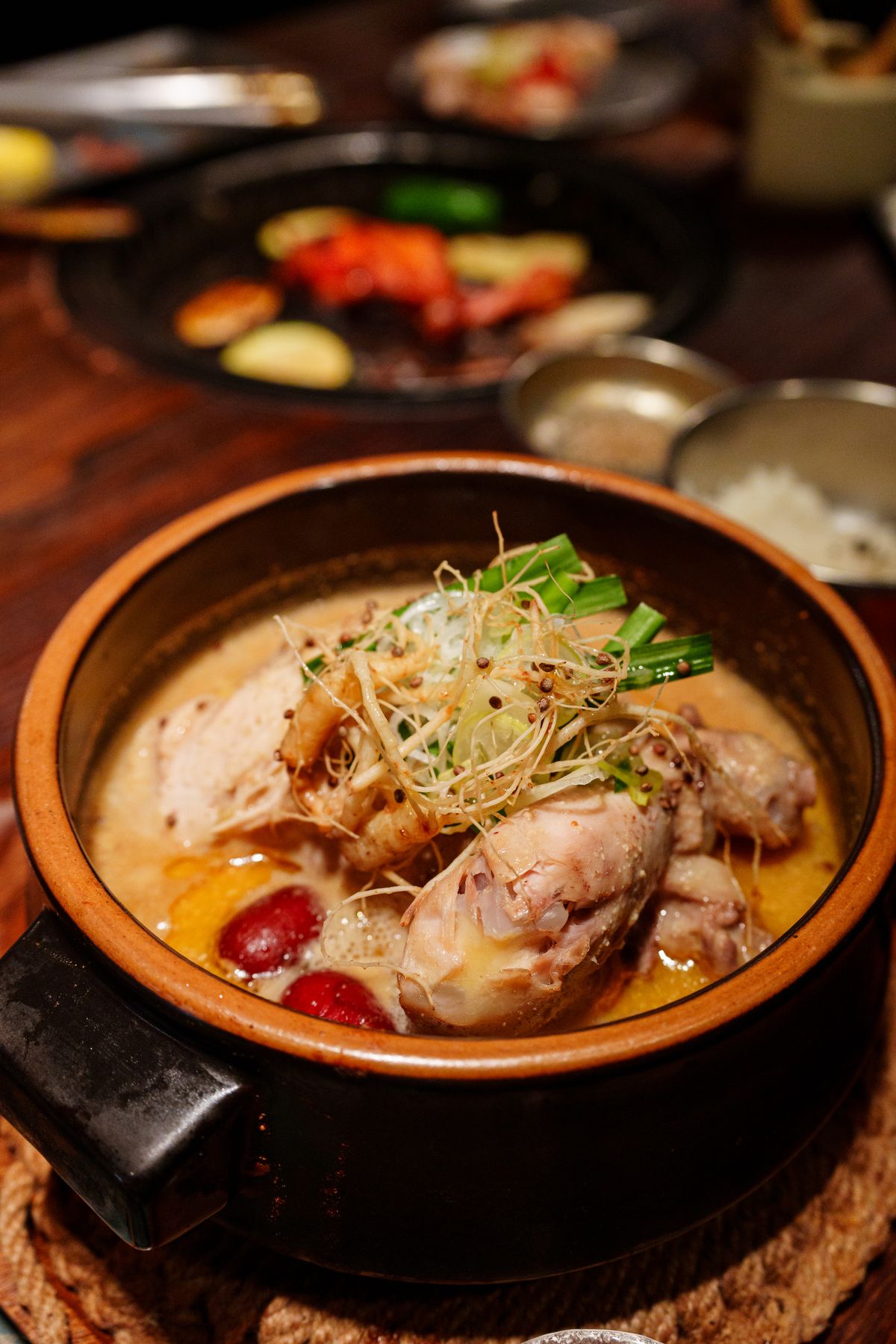
Cooking times vary with equipment and ingredient size; look for the stated texture and doneness cues.
🛒 Ingredients checklist
👩🍳 Step-by-step method
Soak the sweet rice cold before stuffing
Rinse 150 g dry Korean sweet rice until the rinse water is less cloudy, then immerse it in 650 ml drinking water in a covered container. Refrigerate at 5°C or colder for 30 minutes, then drain completely; do not substitute instant pre-cooked rice for the measured dried rice.
Clean and prepare ginseng, dates and soup aromatics
Brush dirt off two small fresh ginseng roots and rinse quickly. Wash eight dried jujubes and remove hard pits, peel 55 g garlic and quarter 150 g onion. Rinse and slice 85 g spring onion, keeping all ingredients separate from utensils used on raw poultry.
Check thawed small chickens safely
Use two small fully thawed chickens, around 650–800 g each. Remove any packaging or giblet bag from the cavities and inspect for remaining pieces of bone. Do not rinse raw poultry under running water, since splashes spread contamination; pat the cavity only with disposable paper if needed.
Stuff lightly with rice and the traditional aromatics
Divide the drained sweet rice, ginseng, garlic and pitted jujubes evenly between the two cavities, leaving space for the rice to swell. Cross the leg ends or secure with a food-safe skewer without packing too tightly; an overfilled cavity may prevent even cooking.
Start the broth and skim the first foam
Place the stuffed birds gently into a deep heavy soup pot with 2700 ml drinking water and quartered onion. Bring to a controlled boil, carefully skim surface foam with a clean ladle, then turn down to a gentle but steady simmer so the soup does not overflow.
Simmer until both poultry and stuffing are completely safe
Simmer partially covered for about 65–80 minutes, turning the birds cautiously once if needed. Use a clean food thermometer on the thickest thigh away from bone and in the centre of the rice stuffing: BOTH locations must reach at least 75°C. Check that the stuffed rice is fully soft, not crunchy, before serving.
Rest briefly and split each bird into two portions
Turn off the heat and let the safely cooked chickens rest in the hot broth for about five minutes. Carefully lift the birds onto a clean board, remove any food-safe skewers and divide each in half using clean utensils, ensuring the hot rice filling is shared evenly between four plates.
Ladle into bowls and season only at the table
Divide the tender chicken, rice stuffing and clear ginseng broth among four bowls. Add 85 g sliced spring onion and offer the measured 7 g salt, 2 g pepper and optional 12 ml sesame oil separately. Chill leftover broth and chicken promptly at 5°C or below in shallow covered containers.
Helpful cooking tips and swaps
Do not overstuff the cavity. Because the sweet rice touches raw chicken, both the thickest thigh and the centre of the stuffing must reach 75°C.
🌡️ Food safety and allergens
Contains chicken and optional sesame oil. Ginseng can interact with some medicines; check with a clinician if pregnant or taking relevant medications.
Cool chicken, rice stuffing and broth rapidly, refrigerate at 5°C or below and use within 1–2 days or freeze early; do not leave rice or stock warm overnight.
Practical FAQs
Can I make a bigger batch?
Yes. Use the ingredient scaler but adjust the number of pans or batches. Cooking time does not automatically scale with quantity.
How should leftovers be stored?
Cool chicken, rice stuffing and broth rapidly, refrigerate at 5°C or below and use within 1–2 days or freeze early; do not leave rice or stock warm overnight.
Food safety source: Food Standards Australia New Zealand