Lebanese Parsley Tabbouleh with Bulgur and Lemon
Classic Lebanese-style herb-forward tabbouleh with plenty of finely cut parsley, mint, tomato and spring onion, plus a small measure of bulgur and lemon-olive-oil dressing.
🍽️ Original recipe: 4 servingsThe original quantities and written steps are for 4 servings. Changing the number scales only the ingredient checklist, not method or cooking times. Cook larger batches in appropriate pans.
Jump to ingredients · Jump to method
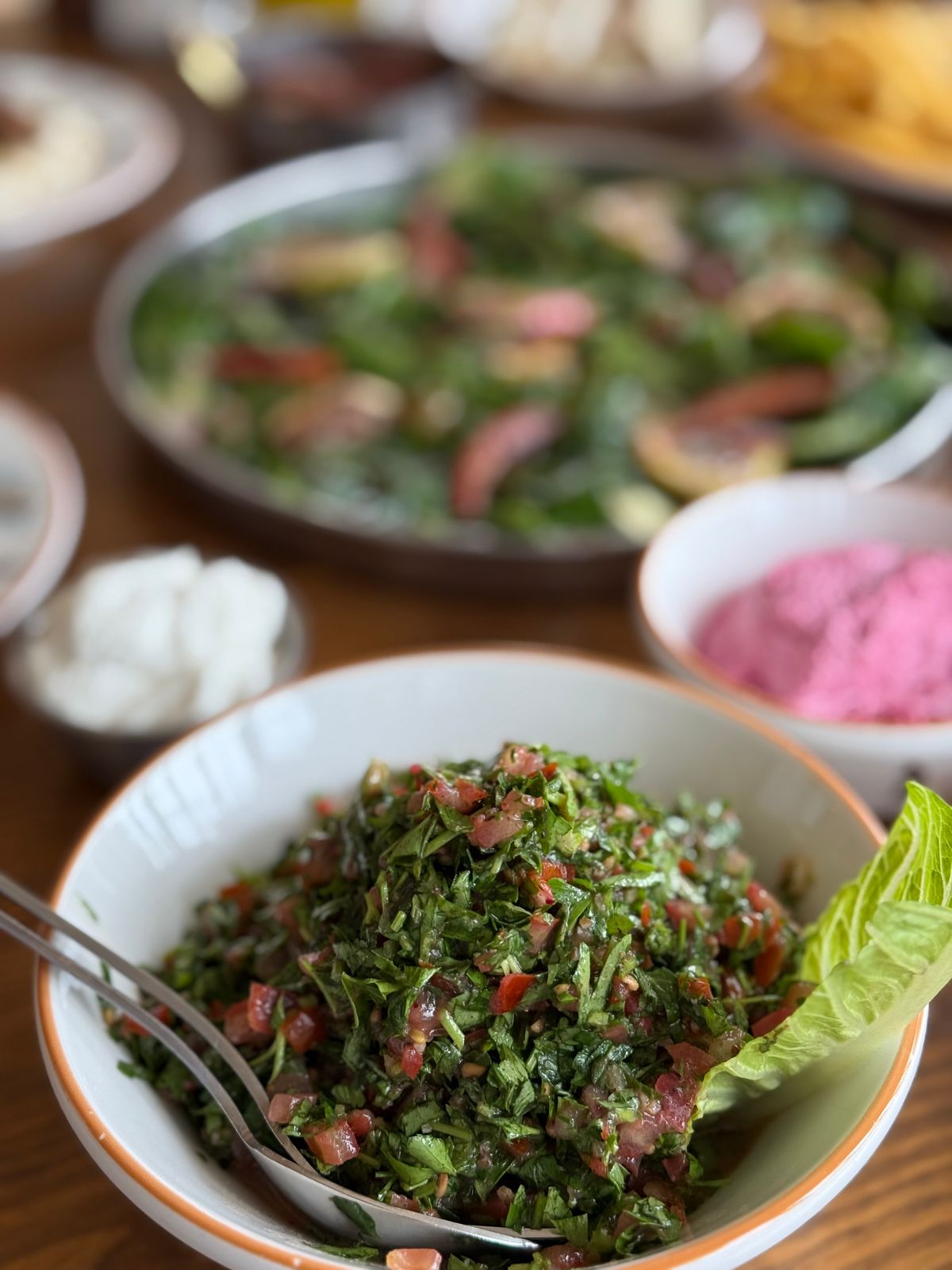
Cooking times vary with equipment and ingredient size; look for the stated texture and doneness cues.
🛒 Ingredients checklist
👩🍳 Step-by-step method
Select fine bulgur and start soaking
Check that your 55 g bulgur is fine-grind wheat rather than coarse whole-grain pieces. Put it into a clean heatproof bowl, pour over the measured 200 ml freshly boiled drinking water, cover and leave for 20–25 minutes until each grain is tender when chewed without a hard centre.
Wash and thoroughly dry fresh herbs
Rinse 150 g flat-leaf parsley and 30 g mint under cool running water, removing discoloured leaves and very thick parsley stems. Spin dry or carefully pat with clean towels, because wet herbs dilute the lemon dressing and make the whole salad heavy.
Chop parsley and mint very finely
Gather the dry parsley into tight small bunches and use a sharp knife to shave across the leaves into fine pieces; repeat with the mint. Avoid crushing the herbs with a blunt blade or running them into a wet paste in a blender, since fresh green leaf texture is the hallmark of tabbouleh.
Deseed and dice tomatoes and cucumber
Wash 300 g firm tomatoes, 160 g Lebanese cucumber and 70 g spring onions, then pat dry. Scoop watery seeds from the tomatoes and cucumber, dice their flesh into roughly 5 mm cubes and slice the spring onions as thinly as possible so the herbs remain the main flavour.
Drain the bulgur until almost dry
Tip the softened bulgur into a fine sieve and allow all soaking liquid to drain. Press very gently with the back of a clean spoon to remove pooled water without mashing the grains; cool until no longer warm before adding it to the fresh parsley and mint.
Whisk a lemon and olive oil dressing
In a small bowl whisk together the measured 65 ml fresh lemon juice, 50 ml extra virgin olive oil, 4 g fine salt and 1 g ground black pepper for 20–30 seconds. Taste with a clean spoon; the dressing should taste fresh and lemony rather than oily, with no need for added sugar.
Toss the herbs and vegetables only before eating
Put the chopped parsley and mint into a broad dry serving bowl, fold through the cooled bulgur, diced tomato, cucumber and sliced spring onion. Pour in the lemon dressing and use two clean spoons to lift and toss the mixture gently until the herbs shine without becoming crushed.
Serve four bowls and refrigerate preparations
Divide the bright green tabbouleh into four clean bowls and serve immediately as a salad or alongside a separate main. For advance preparation, refrigerate chopped vegetables and dressed bulgur separately at 5°C or colder and mix just before serving; discard if food has stood warm for too long.
Helpful cooking tips and swaps
Lebanese tabbouleh should be mostly parsley and mint rather than a bulgur-heavy grain salad. Drain the tomato and bulgur so the herbs remain fresh.
🌡️ Food safety and allergens
Contains wheat/gluten from bulgur. Do not serve to anyone with coeliac disease or wheat allergy without a verified suitable replacement.
Store prepared herbs and salad at 5°C or below and eat preferably on the day it is made. The dressed salad softens over time; discard if temperature control is uncertain.
Practical FAQs
Can I make a bigger batch?
Yes. Use the ingredient scaler but adjust the number of pans or batches. Cooking time does not automatically scale with quantity.
How should leftovers be stored?
Store prepared herbs and salad at 5°C or below and eat preferably on the day it is made. The dressed salad softens over time; discard if temperature control is uncertain.
Food safety source: Food Standards Australia New Zealand