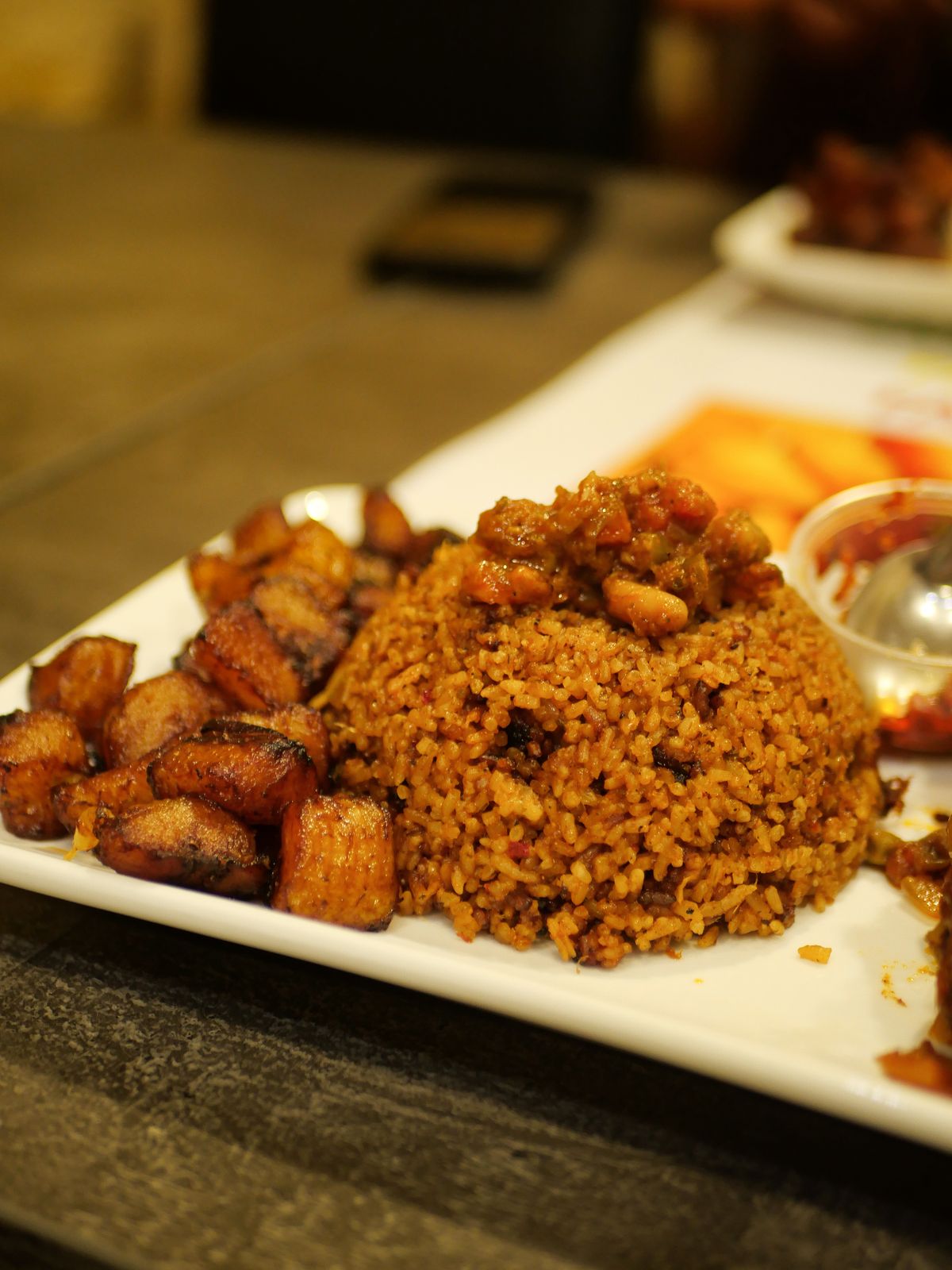
Nigerian-Style Jollof Rice with Fried Plantains
Nigerian-inspired jollof made with long-grain rice, slow-cooked tomato-pepper base and golden pan-fried ripe plantains, with clear rice-safety guidance.
🍽️ Original recipe: 4 servingsThe original quantities and written steps are for 4 servings. Changing the number scales only the ingredient checklist, not method or cooking times. Cook larger batches in appropriate pans.
Jump to ingredients · Jump to method
Cooking times vary with equipment and ingredient size; look for the stated texture and doneness cues.
🛒 Ingredients checklist
👩🍳 Step-by-step method
Rinse rice and prepare the blender vegetables
Measure 320 g dry parboiled rice, rinse two or three times with drinking water and drain well. Roughly chop 170 g deseeded capsicum, half of the measured 180 g red onion, 15 g chilli, 15 g garlic and 12 g ginger; keep raw rice separate from the later cooked batch.
Blend the tomato and pepper base until smooth
Add the 400 g canned tomatoes with their juices, chopped capsicum, half the onion, chilli, garlic and ginger into a clean blender. Secure the lid and process 45–60 seconds until the mixture is pourable with no large vegetable chunks; do not overfill the jug.
Sauté the remaining diced onion and tomato paste
Heat 35 ml of the measured 60 ml oil in a heavy lidded pot over medium heat. Add the remaining 90 g diced onion for about 4 minutes until translucent, then stir in 45 g tomato paste for 2 minutes until it turns a deeper brick-red colour without sticking or burning.
Reduce blended sauce and activate the spices
Pour the blended tomato-pepper mix into the pot; add 6 g mild curry powder, 2 g dried thyme, two bay leaves and 5 g salt. Simmer uncovered for approximately 10–12 minutes, stirring regularly, until the sauce loses its raw tomato smell and becomes visibly thicker.
Add rice and measured stock before covering
Stir 320 g rinsed rice through the hot tomato base for one minute to coat each grain. Add the measured 450 ml vegetable stock, stir once and bring just to a gentle boil. Cover tightly, reduce to low heat and simmer approximately 23–28 minutes; avoid lifting the lid repeatedly and releasing essential steam.
Check the grain texture and let the rice rest
After roughly 25 minutes lift the lid once and taste one grain with a clean spoon. It should be tender through the centre, not crunchy. If hard and drying, add a little of the measured 100 ml water around the edge and cover for a few more minutes; then turn off the heat and rest covered five minutes.
Fry ripe plantain slices in a separate pan
Peel 400 g very ripe plantain and cut the flesh into diagonal slices about 1 cm thick. Warm the final 25 ml cooking oil in a wide non-stick frying pan over medium heat. Fry in two batches for about 2–3 minutes per side until golden brown and soft inside, lowering heat if the natural sugars start to blacken.
Serve four bowls and chill any extra rice promptly
Remove the bay leaves, fluff the hot jollof gently without crushing the grains, and divide between four clean plates. Add the fried plantain on the side, serve immediately, and refrigerate leftover rice promptly in shallow containers at 5°C or colder. Never leave cooked rice on a warm counter overnight.
Helpful cooking tips and swaps
Reduce the tomato-pepper stew before adding rice. Use true ripe cooking plantain rather than a dessert banana for the matching savoury-sweet side.
🌡️ Food safety and allergens
Read exact vegetable-stock and curry-powder labels for allergens and animal ingredients. The dish is vegan only when those packaged products meet that standard.
Cooked rice requires rapid cooling due to Bacillus cereus risk. Refrigerate promptly at 5°C or below, use within 1–2 days or freeze, and reheat thoroughly.
Practical FAQs
Can I make a bigger batch?
Yes. Use the ingredient scaler but adjust the number of pans or batches. Cooking time does not automatically scale with quantity.
How should leftovers be stored?
Cooked rice requires rapid cooling due to Bacillus cereus risk. Refrigerate promptly at 5°C or below, use within 1–2 days or freeze, and reheat thoroughly.
Food safety source: Food Standards Australia New Zealand